Blog
Academic freedom under pressure
8. January 2026

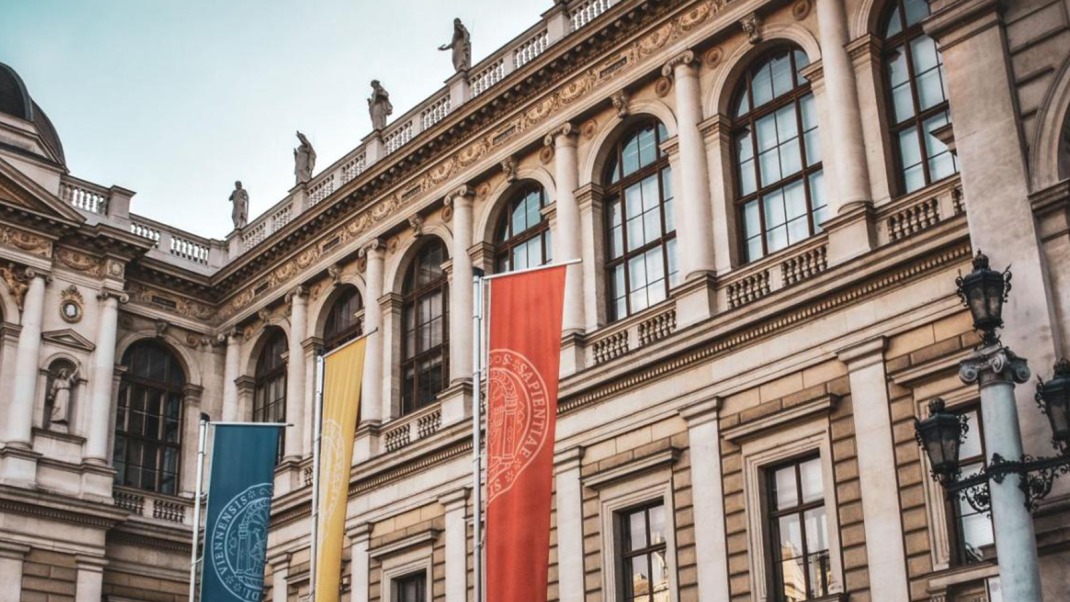
The freedom of science is an important fundamental right and a prerequisite for gaining knowledge and developing understanding at universities and research institutions. Academic freedom must therefore be secured so that science can flourish. FORWIT has already published a statement on this matter. At the same time, democratically organised societies need scientific evidence and established facts in order to negotiate issues and make decisions. Thus, “attacks on academic freedom (…) are attacks on democracy itself”1. However, the state of academic freedom internationally is not at its best. In our neighbouring country Hungary, “systematic and structural violations of academic freedom”2 have been the order of the day for many years, meaning the country now ranks amongst the bottom 20 to 30 per cent of countries worldwide with regard to academic freedom.3 The reasons for this classification include, amongst others, that the universities and the Academy of Sciences have been placed under the control of the Fidesz government, that gender studies programmes have had their accreditation withdrawn, and that government-aligned media frequently discredit researchers and scientific institutions.
More recently, attacks on universities and restrictions on scientific research in the United States have been widely discussed. Particularly in the first half of 2025, networks such as Scholars at Risk reported extensive measures by the US government. “These actions included extralegal executive orders targeting individual universities by revoking their funding; a series of attempts to arrest, detain, and attempt to deport without due legal process US-based, noncitizen scholars and students; and executive, legislative, and other actions aimed at eliminating research, programming, and academic supports related to diversity, equity, and inclusion; gender; environment; and many other areas.”4 However, as the European Parliament has noted, academic freedom is also coming under increasing pressure in the European Union, although in no other member state is this anywhere near as extensive as in Hungary.5 Regarding Austria, its favourable positioning in the Academic Freedom Index 2025 amongst the top 10 per cent worldwide is notable, but so too is a significant deterioration in academic freedom between 2014 and 2024.6)
Internationally, restrictions and violations of academic freedom particularly affect individual scientific disciplines. In addition to the aforementioned gender studies, vaccine research and virology have come under pressure since the COVID-19 pandemic. Changes in the political landscape have also brought less favourable conditions for climate research and migration research. Ultimately, however, the tendency towards restriction of academic freedom affects all disciplines, because the causes of the deteriorating situation are diverse and are by no means limited to the interventions of autocratic governments in individual countries.
In addition to direct interventions affecting degree programmes such as gender studies, the European Parliament report mentions indirect influences such as the extent of public funding, the governance of higher education institutions and research organisations, or the working conditions of researchers.7 The latter is also cited in the “Graz Declaration on Academic Freedom” from the 2025 Austrian Higher Education Talks: “employment law dependencies, precarious employment and the increasing focus on securing third-party funding may have the potential to impair individual research freedom”.8 A large proportion of external financing through so-called third-party funding restricts the independence of researchers, amongst other ways, through increased pressure to conform.9
The breadth of factors contributing to restrictions on academic freedom is demonstrated by references to civil society, the business sector and security policy.10) Under the heading of “civil society”, for example, hostility towards researchers and scientific institutions, particularly on social media, is discussed.11 Regarding the business sector, the European Parliament report first emphasises that collaborations between higher education institutions and companies should be viewed positively, before adding: “At the same time, in Germany like in other EU Member States there are worries about the relative lack of appropriate regulations for and transparency of academic-private sector collaborations. This has led to worries about the possible impact of these increasing partnerships on academic freedom, e.g. when it comes to the freedom of academics to determine their own research problems, their preferred forms of dissemination and publishing of research results, and the issue of the ownership of research results”.12 Security policy and defence have recently become sources of possible restrictions on academic freedom in the EU. This particularly concerns changes in funding (dual use of research), knowledge export and restrictions on internationalisation.13
Just as diverse as the sources of possible restrictions on academic freedom are the approaches mentioned in the debate for securing academic freedoms. The following conditions are frequently cited14:
– Stable public funding of higher education institutions and research organisations
– Strong legal protection of academic freedom
– Co-determination structures and avoidance of centralisation of decisions at higher education institutions
– Job security and fewer fixed-term contracts for academic staff
– Strengthening public trust in scientific research results and institutions
– Securing free choice of research topics through autonomy from economic and political influences
– Protection of researchers from hostility, intimidation and particularly hate speech online
The recently launched development of the Austrian Higher Education Strategy 2040 is a favourable opportunity to review the conditions for academic freedom and improve them where necessary. FORWIT is currently working on a higher education analysis that will provide a foundation for this process. At the same time, the issue must be considered more comprehensively: just as democratic negotiation and thus democracy itself requires scientific evidence, the defence of democracy is a fundamental prerequisite for academic freedom. In this respect, in times of unusual strength of anti-pluralist parties and the tendency towards autocratic forms of government, the most important lever for securing academic freedom probably lies therein.
- https://uni-tuebingen.de/fakultaeten/wirtschafts-und-sozialwissenschaftliche-fakultaet/faecher/fachbereich-sozialwissenschaften/rechtsextremismusforschung/aktuell/nachrichtenarchiv/newsfullview/article/solidarisch-angriffen-auf-die-freiheit-von-forschung-und-lehre-entgegentreten/↩
- European Parliament (2025): Academic Freedom Monitor 2024 – Analysis of de facto state of academic freedom in the EU – Country overview. Brussels: EPRS | European Parliamentary Research Service: II↩
- Kinzelbach, K., Lindberg, S.I., and Lott, L., Panaro, A. (2025). Academic Freedom Index 2025 Update. FAU Erlangen-Nürnberg and V-Dem Institute. DOI: 10.25593/open-fau-1637.↩
- Scholars at Risk (2025): Free tot hink. Report of the Scholars at Risk Academic Freedom Monitoring Project.↩
- European Parliament (2025): Academic Freedom Monitor 2024 – Analysis of de facto state of academic↩
- Kinzelbach et al. (2025↩
- European Parliament (2025): 111↩
- https://www.uni-graz.at/de/neuigkeiten/hochschulgespraeche-2025-akademische-freiheit-zwischen-bedrohung-und-verantwortung/↩
- Iddeng, J. (2025): Nordic academic freedom under threat; Schimank, U. (2021): Universitäten und Gesellschaft im Wandel. Folgen für die Wissenschaftsfreiheit? APuz 46/2021; Kostner, S. (2021): Disziplinieren statt argumentieren. Zur Verhängung und Umsetzung intellektueller Lockdowns, APuZ 46/2021.↩
- European Parliament (2025↩
- Seeger, C., Frischlich, L., Obermaier, M., Schmid, U.K., and Schulze H. (2024). Hate Speech und Angriffe auf Wissenschaftler:innen. Ein Forschungsüberblick. Berlin: Berlin-Brandenburgische Akademie der Wissenschaften.↩
- European Parliament (2025): 77↩
- European Parliament (2025): 60↩
- Amongst others: European Parliament (2025); Iddeng 2025; Grazer Erklärung zur Akademischen Freiheit; Abschlussmemorandum der Kampagne „Freiheit ist unser System”.↩

