EU Inc. – a chance for Austria’s innovation system
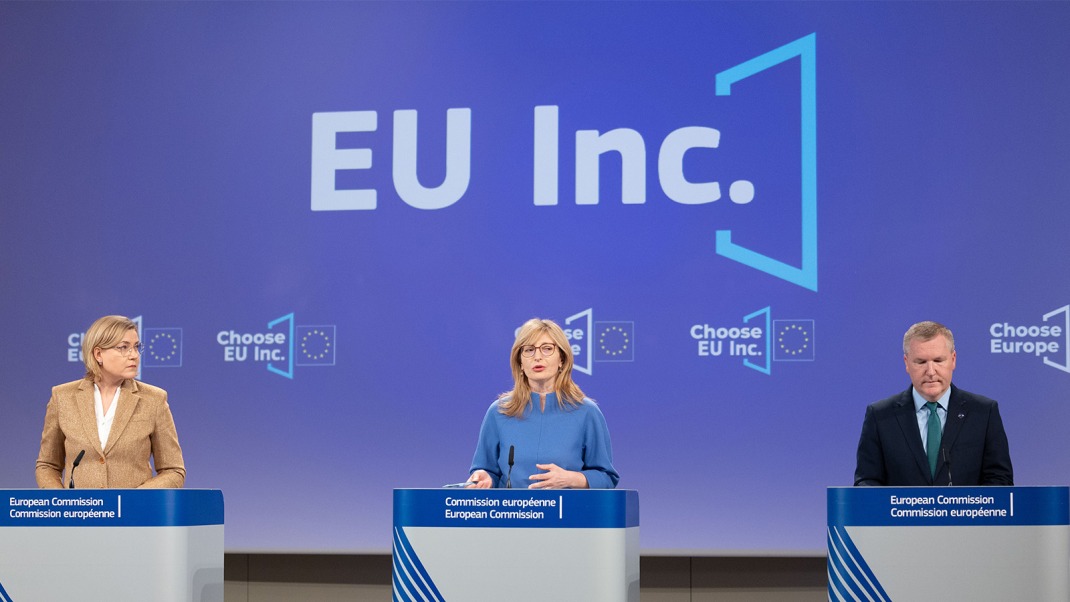
The members of the Science to Business working group, which focuses on the transfer of knowledge into commercial exploitation, call on the federal government in an open letter to champion an effective EU Inc. in the EU negotiations, not least in the interests of Austria as a location for innovation. The Union-wide legal form, known as a 28th regime, addresses, among other things, the scaling of innovative companies – a key weakness of the Austrian innovation system as well. Yet the drafts reveal that two core elements of the European Commission’s proposal are at stake in the negotiations: the central European business register and standardised employee share ownership.
Austria’s status quo: scaling as a weak point in the innovation system
Austria has a strong research base, but its economic potential is inadequately converted into scalable business models. Aside from deficits at other points in knowledge transfer, there are three critical weaknesses in the innovation system in particular that hold back the successful exploitation of research results: the absence of large anchor customers, weak private follow-on financing, and poor framework conditions for scaling.
The STI Monitor underpins this diagnosis: in the area of start-ups, Austria reaches only 52% of the level of the innovation leaders. The venture capital ratio – with a one-off outlier in 2021 – has remained at the same level for years, at around 0.03% of GDP – far from the RTI Strategy 2030 target of 0.1%. And the value of unicorns relative to GDP, at 1.36% domestically (declining), not only falls significantly behind the innovation leaders’ 3.19%, but even behind the EU27 at 2.38%. Young and fast-growing companies paint a similar picture.
The European dimension: Letta, Draghi and the tech diaspora
Austria is not alone in this: in his 2024 report, Enrico Letta diagnosed that the convergence of national legal systems is too slow to realise economies of scale – per capita income in the US has risen by almost 60% since 1993, while Europe’s has grown by less than 30%. Also in 2024, Mario Draghi quantified the innovation gap: not a single EU company with a market capitalisation of over 100 billion euros was founded in the past fifty years; almost 30% of European unicorns have relocated their headquarters abroad. As a measure, his report proposed a Union-wide legal form with a single digital identity valid across the EU, as a 28th regime.
It is not only scalable and scaling-minded companies that are moving away; European talent is also leaving Europe: according to Dealroom’s European Diaspora Index, founders who grew up in Europe have built more than 400 unicorns worth around 1.8 trillion dollars outside the continent. The problem is clearly not a lack of entrepreneurial talent, but an ecosystem that makes founding and scaling in Europe harder rather than easier.
Two deletions, two core elements
To reverse this outflow of talent, knowledge and entrepreneurship, the Draghi report had already called for a new legal form. The EU Inc. is intended to deliver this – but for this measure to be effective, all five elements contained in the Commission’s proposal are essential from the perspective of the FORWIT working group: a central European business register, standardised employee share ownership, free choice of registered office, access for all companies, and the applicability of local employment and tax law.
It is precisely the first two elements that are at stake in the negotiations. The central register, as a unified digital interface to Europe’s governments, is the infrastructural core of a genuinely pan-European, effective EU Inc. – without such a register, 27 national systems would emerge that the economy does not need. It reduces costs, increases cross-border transparency, and allows an infrastructure to be developed once rather than 27 times for Europe. Standardised stock options, in turn, given the demand for talent, are a competitive factor that Austria and Europe should not forgo.
Scaling – the third deficit
The federal government is already addressing two of the transfer deficits mentioned – the lack of anchor customers and the shortage of risk and growth capital – through strategic public procurement and the establishment of an umbrella fund. An effective EU Inc. would tackle the third in a powerful way: if Austria, together with Europe, succeeds in creating an effective EU Inc., the problem of scaling innovative companies at this location would additionally be addressed with real force. For the members of the FORWIT working group, the EU Inc. is a once-in-a-generation opportunity for Austria and Europe.
In its letter, the working group offered the federal government its support in deepening and accompanying the Austrian position in Brussels.


 Steven Lelham