Budget: Despite Savings, a Promising Sign for Science and Innovation
FORWIT welcomes the commitment to research and innovation. The RTI Pact, higher education strategy, and international evaluation of the RTI system should now be addressed swiftly.
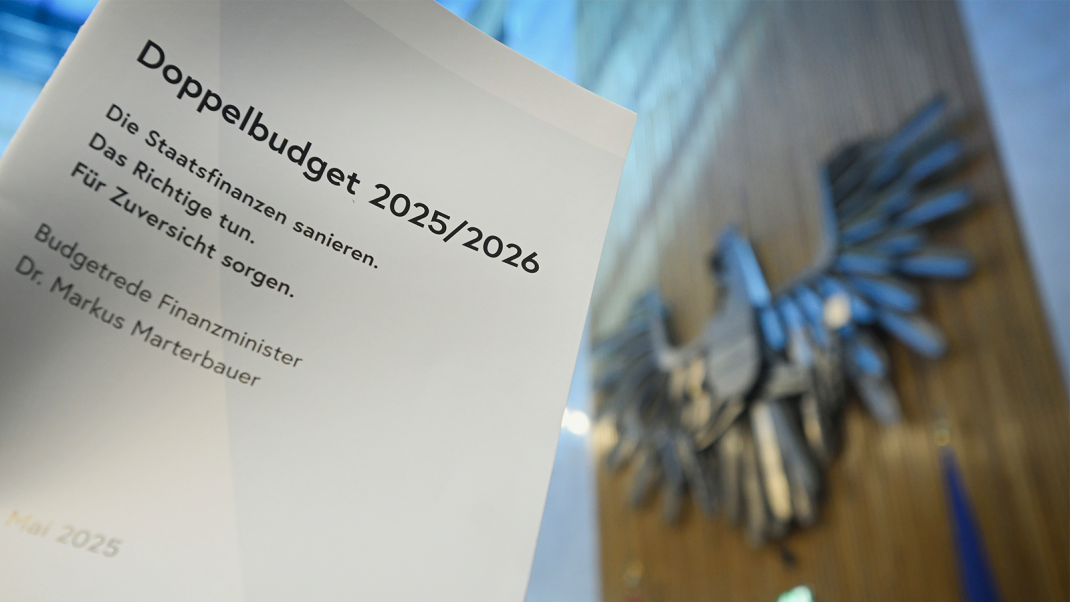
The federal government has presented a double budget with consolidation measures affecting all areas of society. However, the signals sent out in the budget speech also suggest that the federal government is aware of the central importance of research and innovation for Austria’s future. In his speech, the finance minister pointed out that research expenditure strengthens the country and contributes significantly to innovation and economic dynamism – and thus to urgently needed growth. “It is good that Federal Minister Marterbauer emphasises the need for investments in research and innovation for the country’s future. Now it is important that a corresponding RTI Pact for the three-year period 2027-29 follows quickly,” says Thomas Henzinger, Chairman of FORWIT.
The government has nevertheless avoided making disruptive cuts.
Thomas Henzinger
During the 2024 National Council elections and coalition negotiations, the Council regularly pointed out that expenditure on science and research represents an important investment in the future and creates the basis for Austria’s competitiveness and innovation capacity. From the Council’s point of view, the savings announced for 2025 and 2026 as a solidarity contribution are painful for Austria’s RTI sector. “In the context of the budgetary situation that will challenge us in the coming years, the federal government has nevertheless avoided making disruptive cuts,” says Henzinger. In his view, this applies not least to the Austrian Future Fund. He considers it a success that this small but significant financing instrument, due to its complementary effect, is not completely discontinued but will be maintained at a low level in 2026. For the following years, Henzinger expects the increase in the fund as planned in the government programme. This should also be used to focus the use of this fund in line with the next RTI Pact.
RTI Pact in the Context of Higher Education Strategy and Evaluation of the RTI System
The approach of recent weeks is also encouraging: in many individual discussions, ministers have exchanged views with research institutions and agencies on how the solidarity contribution required for budget consolidation should be structured. Furthermore, the federal government is adhering to the ambitious goal of a research quota of 4 per cent by 2030. However, this increases the challenge of successfully negotiating the next RTI Pact for 2027-29 by the end of this year. In addition to the multi-year financing lines, strategically relevant aspects should be specifically integrated.
The results of the interim evaluation of the RTI Strategy 2030 are expected to be available by mid-year, which should provide information on where there is a need for improvement in the RTI system and which opportunities can be used for its further development. Furthermore, the federal government intends to develop a higher education strategy for 2040 and to carry out an international evaluation of the RTI system. As an advisory board that is supposed to support the federal government in all matters relating to research, science and innovation policy, FORWIT sees itself as particularly obligated in these tasks, Henzinger affirms. “The discussion on how effective higher education and RTI systems can be achieved for a prosperous, resilient and sustainable Austria should begin now.”