Innovation Act and 28th Regime: Impetus for a competitive startup ecosystem
A fundamental improvement in the situation of new enterprises is among the declared priorities of the European Commission (EC) to restore the competitiveness of the European Union to a global level. Over the summer, two legislative initiatives were launched to this end: the European Innovation Act and the 28th Regime.1 Both are intended to enhance the framework conditions, including better access to finance, a Union-wide legal form, and other regulatory measures.
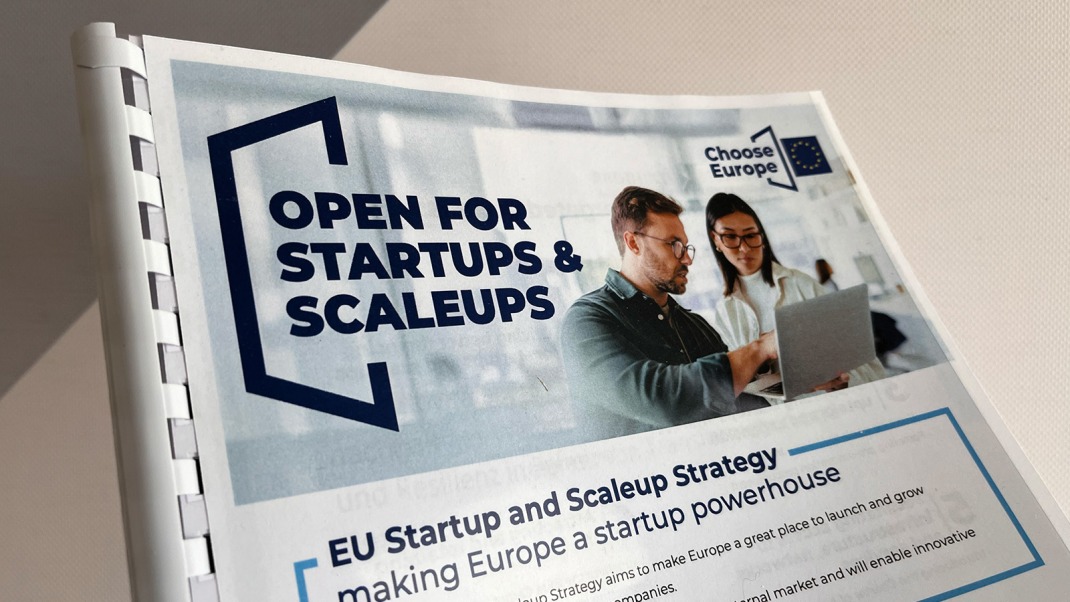
The issue has been a long-standing concern and gained new urgency with the so-called Draghi Report published a year ago, which is also reflected in the Competitiveness Compass. As a significant intermediate step, the EC published a Startup and Scaleup Strategy at the end of May 2025, which aims to define the conditions to enable European startups to rise to globally competitive players. Given its central importance, it is worthwhile to briefly analyse this strategy.
The strategy encompasses five key action areas, each containing central policy recommendations: (i) Smarter, Founder-Friendly Regulation, (ii) Better Access to Finance, (iii) Market Access and Public Procurement, (iv) Talent and Skills, and (v) Infrastructure and Support Ecosystem. Fundamentally, the strategy addresses those challenges that have been identified as central in Europe over the past ten years, such as late-stage financing, regulatory barriers, and talent shortages.
A strength of the strategy lies in its goal to harmonise key framework conditions within the EU more effectively, for example in the area of company formation. Such harmonisation could be crucial in facilitating cross-border scaling of startups. This is particularly important because Europe has so far lagged significantly behind leading innovation countries such as the USA and China, especially during the growth phase (scaleup phase).
Nevertheless, the strategy also entails certain risks—such as implementation uncertainty, since many of the proposed measures require cooperation among all Member States. A lack of cooperation could therefore hamper the implementation of key reform projects.
Challenges: IPO markets, capital market, and tax policy
The exit market in Europe continues to face major challenges. FORWIT council member Georg Kopetz notes: “IPO markets are less liquid and significantly smaller than, for example, NASDAQ. Moreover, compared to the USA and China, there are considerably fewer large European tech corporations that could act as potential buyers. Risk aversion is also significantly higher in Europe than in the USA, China, or India.”
Added to this is the fragmented capital market. According to Invest Europe and OECD, venture capital investment per capita in the EU is significantly below that of the USA and the UK. Europe has more seed financing but fewer Series B+ or growth capital rounds. Unicorns (valued over €1 billion) thus occur less frequently, partly because startups sell earlier or relocate—and this is reflected, among other things, in lower productivity compared to the USA.
Beyond these structural market conditions, tax policy design plays a crucial role in the competitiveness of European growth companies: the IMF concludes, regarding Europe’s productivity gap with the USA, that the current tax structure in Europe is not optimal for promoting fast-growing firms. 2 More efficient support for corporate growth requires avoiding size-dependent fiscal and regulatory incentives for companies or aligning incentives more closely with corporate R&D investments. 3 This could include measures such as accelerated depreciation and tax credits for R&D investments rather than broad cuts in corporate tax or indirect support for businesses. Tax incentives for research and development can be designed to support young, innovative enterprises. 4
Proper ambition must be coupled with proper implementation
With the Startup and Scaleup Strategy, the EU aims to further develop Europe into an active platform for the creation and dissemination of innovation. It complements several other activities mentioned in the Competitiveness Compass, all of which fall under the theme of competitiveness. These implementation steps at the European level will reveal how effectively the fundamentally correct ambitions are realised. Even though the strategy promises simplified regulations and innovation-friendly framework conditions, there is a risk of increased regulation—for example, due to rising bureaucratic burdens in implementing and applying the support measures foreseen in the strategy.
Fundamentally, care should be taken not to spread resources too thinly across numerous small-scale initiatives but rather to focus on a few, internationally competitive scaleups. FORWIT will intensify its investigation of the ecosystem for startups and scaleups within its STI competitiveness workstream, not least in light of the legislative initiatives mentioned above.
- At present, both initiatives are open to public consultation, allowing submissions to the European Commission. For the 28th Regime here (deadline: 30 September) and for the European Innovation Act here (deadline: 3 October 2025).↩
- See International Monetary Fund (2024), Regional Economic Outlook: Europe’s Declining Productivity Growth: Diagnoses and Remedies, Note 1, November 2024.↩
- See Benedek, D/Pragyan D/Garcia B/Saksonovs, S/Shabunina A/Budina N (2017), “The Right Kind of Help? Tax Incentives for Staying Small”, IMF Working Paper 17/139.↩
- See Mitchell, J/Testa G/Sanchez Martinez, M/Cunningham, P/Szkuta.K (2020), “Tax incentives for R&D: supporting innovative scale-ups?”, Research Evaluation 29(2), pp. 121–134.↩