Financing research and innovation: Substantially increasing the efficiency of invested funds

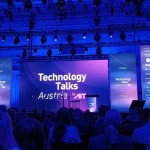
Although Austria makes high investments in research and innovation by international comparison, its performance and competitiveness continues to fall behind internationally. Within the framework of Technology Talks Austria 2025, FORWIT is now calling for increased attention to the efficiency of invested funds in light of the budgetary situation.
Austria’s performance and competitiveness is falling behind internationally
“There is much untapped potential that must be unleashed.”
Thomas Henzinger
The longest recession of the Second Republic, the decline in the European Innovation Scoreboard from 6th to 8th place and the fall in the IMD Competitiveness Index from rank 16 (2020) to now 26 are signals that must be taken seriously and call for swift and targeted action. “Austria’s investments in research and innovation are amongst the top tier in Europe. However, the financial input is not generating the expected output. We have been observing this development for years – not least in the STI Monitor: Austria achieves significantly less output with approximately the same input as the Innovation Leaders. There is much untapped potential here that must be unleashed,” appeals the Council Chair Thomas Henzinger.
Austria risks the successful development of recent decades, which has produced considerable scientific, social and economic results, coming to an end.

No “Business as Usual”: Budgetary Situation Forces Tangible Efficiency Improvements
FORWIT will continue to advocate for a growth path of RTI investments and considers the target of a research quota of 4%, also anchored in the government programme, to be essential. Given the fiscally and economically challenging situation, it is now all the more important from FORWIT’s perspective to focus on the efficiency of deployed resources and to tangibly increase their impact. “A ‘business as usual’ approach, simply increasing input without structurally developing the system further, will not secure our prosperity, security and democracy in the long term,” warns Henzinger.
Viewing the RTI Pact in Conjunction with Other Instruments
FORWIT sees considerable potential in the future of the RTI Pact, which is currently being negotiated for the years 2027 to 2029 and for which the Council has already published its recommendations.
“Austria should increasingly redirect its primarily funding-oriented RTI policy towards demand orientation.”
Sylvia Schwaag Serger
For future RTI Pacts and other innovation policy instruments to realise their full potential, FORWIT considers it necessary to view them in the context of their interaction with other steering and financing instruments – such as higher education financing and indirect research funding – and to optimise framework conditions. “Austria should increasingly redirect its primarily funding-oriented RTI policy towards demand orientation and, parallel to the RTI Pact 2027-29, strengthen innovation demand through innovation-promoting public procurement and regulatory standards – particularly in the security and defence sector as well as in the energy and climate sector,” explains Deputy Chair Sylvia Schwaag Serger.
The evaluation planned in the government programme for 2027 offers the opportunity to adopt a systemic perspective in order to optimise the RTI system holistically and develop it further in an impact-oriented manner.
Actively Shaping European Framework Conditions
“We call upon the Federal Government to treat the implementation of the Capital Markets Union as a priority in European discourse.”
Sylvia Schwaag Serger
At European level, Austria, which benefits considerably from a research-strong EU, should engage actively in completing the single market and advance the European integration process both strategically and communicatively. “If we want to effectively strengthen European technology companies in the increasingly fierce competition with China and the USA, the Capital Markets Union in particular must be implemented swiftly. Austrian companies especially would benefit from this, which is why we call upon the Federal Government to treat implementation as a priority in European discourse,” maintains Schwaag Serger.
“Research, technology and innovation hold the keys to mastering current and future challenges. We can only secure Austria’s prosperity, security and democracy if we do not slacken in our innovative and technological efforts whilst simultaneously optimising the existing RTI system holistically,” affirms Henzinger regarding the urgency of this task.