Blog
All quiet in Brussels?
2 October 2026


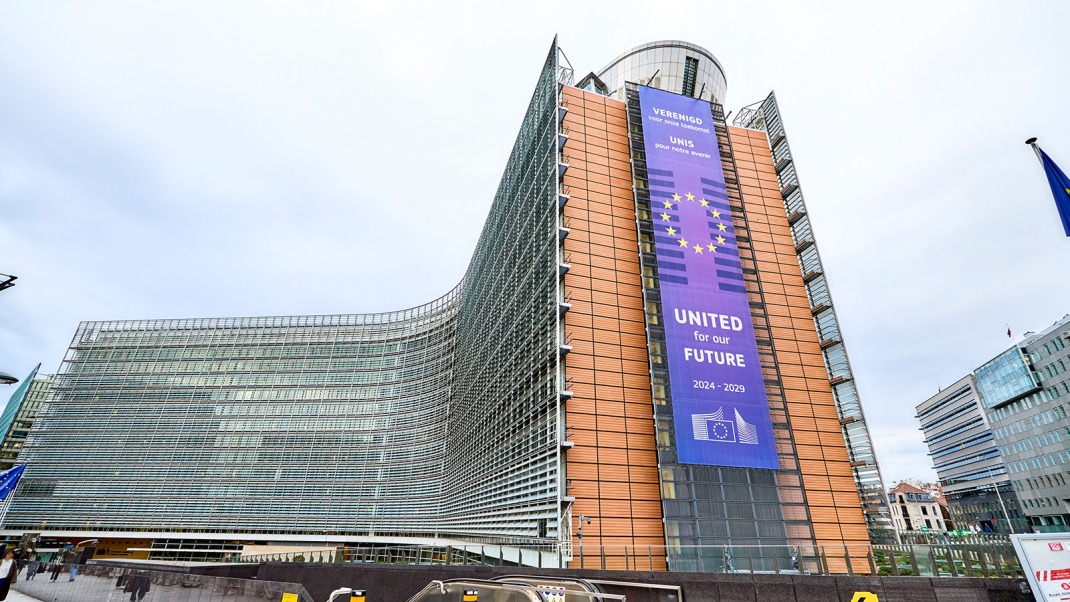
The European Union is waiting. It’s still unclear how the next EU budget will be settled, and just as unclear how big a slice the Framework Programme for Research (FP10) will get and how much independence it will keep alongside the European Competitiveness Fund (ECF). We set out the options on the table in an earlier blog post. Things haven’t become any clearer since then, neither regarding the interplay with the ECF nor the final allocation of the budget.
High-ranking politicians are touring the capitals to gauge national sentiment, and probably to influence it a little, too. Council President António Costa, for instance, stopped off in Vienna in mid-September as part of his ‘Tour des capitales’. A few days earlier, Christian Ehler, the European Parliament’s lead rapporteur for FP10 in the Committee on Industry, Research and Energy (ITRE), was a guest at the Technology Talks Austria. Positions, however, have barely shifted: a group of six countries led by Germany, Austria among them, is pushing for a leaner EU budget, while 16 countries from the south and east are resisting cuts, particularly to cohesion policy.
At the same time, some observers noticed that von der Leyen did not mention the topic once in her State of the Union address. But this is hardly a coincidence: it is not customary in Brussels to talk about matters that are currently under negotiation. That, at least, is some comfort: finances and research are evidently being discussed, just behind closed doors.
The EIT and the Joint Undertakings under scrutiny
Beneath these big issues, research policy is carrying on much as usual. That includes the stakeholders of the next framework programme jockeying for position. As ever, the European Commission is running consultations, some of which seem quite obviously designed to use a supposedly objective, neutral survey to secure a programme’s survival. The European Institute of Innovation and Technology (EIT) is a case in point. Brussels would do well to show a little more willingness to wind a programme down once in a while, as the Heitor report recommended, a point we reiterated in our own statement.
Other consultations have more substance, such as the one on a Single Basic Act for the Joint Undertakings, a common legal basis for all of these partnerships. Joint Undertakings bring public and private partners together for the long haul, making possible projects that would be too big for any one country or company to take on alone, whether in chips, supercomputing or aviation. These are valuable programmes with real substance, although in our view they would benefit from greater harmonisation, for instance through a better-structured portfolio and less red tape.
The Innovation Act and EU Inc.: a boost for competitiveness?
Beyond the framework programme, research policy is also becoming more closely tied to innovation and competitiveness policy. Research funding has always sat under the ‘Competitiveness’ heading of the EU budget. Since last year, though, the Commission has taken on an ambitious raft of legislative initiatives, which we already wrote about in summer 2025. Some of these are now up for discussion as formal proposals: the European Innovation Act, which goes hand in hand with the European Public Procurement Act, is still being negotiated by Parliament and the Member States. Further along is the ‘28th regime’: under the name EU Inc., it would create an EU-wide legal form for companies, which now, however, also needs the backing of the Member States. FORWIT’s Science to Business working group recently set out its recommendations on this to the Austrian federal government in an open letter.
The ERA Act keeps us waiting, too
Then there’s the shaping of the European Research Area. The ERA Policy Agenda identified areas in which the Member States are to harmonise their approaches voluntarily and jointly. Austria has developed its own ERA National Action Plan for this purpose, covering the period 2026-28. But here, too, the Commission has raised the bar: now we are all waiting for the ERA Act. It was originally announced for the third quarter of 2026, in the annex to the Commission’s 2026 Work Programme. Perhaps the delay simply comes down to the Commission struggling to keep up with the flood of legislative proposals announced at the start of Ursula von der Leyen’s second term. The Competitiveness Compass timeline of actions was updated only a few days ago, but little has changed.
The annual R&I Days take place in Brussels again in mid-November. Perhaps we’ll learn more then. Stay tuned.