Blog
Innovation Act, 28th Regime: Impetus for the startup ecosystem
1 August 2025


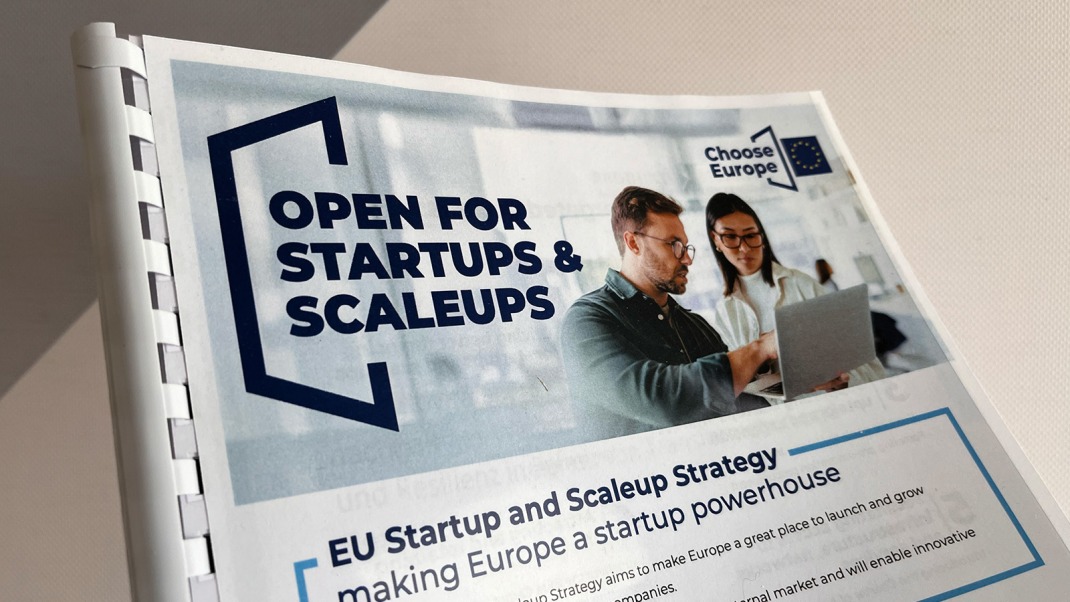
A fundamental improvement in the situation for new businesses is among the declared priorities of the European Commission (EC), aiming to restore the European Union’s global competitiveness. Over the summer, two legislative initiatives have been launched in this regard: the European Innovation Act and the 28th Regime.1) Both aim to improve the framework conditions, notably by enabling better access to finance, introducing a pan-European legal form, and enacting further regulatory measures.
This topic has long been pressing and gained new urgency a year ago with the so-called Draghi Report, not least influencing the Competitiveness Compass. As an important intermediate step, the EC published a Startup and Scaleup Strategy at the end of May 2025, outlining the prerequisites to enable European startups to rise to become globally competitive players. Owing to its central relevance, it is reasonable to briefly review the strategy’s contents.
The strategy covers five main areas for action, each with specific recommendations: (i) Smarter, Founder-Friendly Regulation, (ii) Better Access to Finance, (iii) Market Access and Public Procurement, (iv) Talent and Skills, and (v) Infrastructure and Support Ecosystem. Fundamentally, the strategy addresses those challenges identified as central in Europe over the past decade, such as late-stage financing, regulatory barriers, and the talent shortage.
A strength of the strategy lies in its goal of further harmonising key conditions across the EU, such as in business formation. Such harmonisation could be critical in facilitating the cross-border scaling of startups—vital, as Europe still lags significantly behind leading innovation nations like the USA and China, particularly in the scaleup phase.
Nevertheless, the strategy also entails a range of risks, for instance, uncertainty concerning implementation, as many proposed measures will require cooperation from all Member States. A lack of cooperation could, therefore, hamper the implementation of key reform projects.
Challenges: IPO markets, capital markets, and tax policy
Europe’s exit market still faces major challenges. As FORWIT Council Member Georg Kopetz puts it: “IPO markets are less liquid and significantly smaller than, for example, NASDAQ. There are also far fewer large European tech companies than in the USA or China that could act as potential buyers. In addition, the risk aversion is much higher in Europe than in the USA, China or India.”
Added to this is the fragmented capital market. According to Invest Europe and the OECD, per capita venture capital investment in the EU remains well below that in the USA and the UK. Europe sees more seed funding but far fewer Series B+ or growth capital rounds. As a result, large unicorns (valued at over €1 billion) are rarer, in part because startups tend to sell earlier or relocate abroad—ultimately contributing to Europe’s lower productivity compared to the USA.
Beyond these structural market conditions, tax policy also plays a decisive role in the competitiveness of fast-growing European businesses. The IMF has concluded that, regarding Europe’s productivity gap with the USA, the current tax structure in Europe is not optimal for supporting fast-growing companies.2 More effective support for business growth would require avoiding size-dependent tax and regulatory incentives for firms and targeting tax incentives more narrowly at companies’ R&D investments.3 For example, this could be achieved through accelerated depreciation and tax credits for R&D investments, rather than broad cuts to corporation tax or indirect company support schemes. Tax incentives for research and development can thus be designed to support young, innovative companies.4
The right ambition must be followed by the right implementation
Through the Startup and Scaleup Strategy, the EU aims to further develop Europe into an active platform for the emergence and dissemination of innovation. It works alongside other activities cited in the Competitiveness Compass, all under the umbrella of competitiveness. These steps at the European level will show how successful the otherwise sound ambitions prove in practice. For, while the strategy promises streamlined regulations and innovation-friendly framework conditions, there is still a risk of increased regulation—for instance, through heightened bureaucracy in the implementation and application of the support measures outlined in the strategy.
It is essential to note, fundamentally, that resources should not be spread too thinly across numerous small-scale initiatives; instead, targeted support should be directed to a few, but internationally competitive, scale-ups. Owing not least to the legislative initiatives mentioned at the outset, FORWIT will continue to investigate, within the focus area of competitiveness in STI, ways to further improve the startup and scaleup ecosystem.
____
- At present, stakeholders can submit statements on both initiatives to the European Commission as part of a public consultation process – for the 28th Regime here (closing: 30 September), and for the European Innovation Act here (closing: 3 October 2025↩
- see International Monetary Fund (2024), Regional Economic Outlook: Europe’s Declining Productivity Growth: Diagnoses and Remedies, Note 1, November 2024↩
- see Benedek, D/Pragyan D/Garcia B/Saksonovs, S/Shabunina A/Budina N (2017), “The Right Kind of Help? Tax Incentives for Staying Small”, IMF Working Paper 17/139↩
- see Mitchell, J/Testa G/Sanchez Martinez, M/Cunningham, P/Szkuta. K (2020), “Tax incentives for R&D: supporting innovative scale-ups?”, Research Evaluation 29(2), pp. 121–134↩
