Financing research and innovation: Substantially increasing the efficiency of invested funds

Although Austria makes high investments in research and innovation by international comparison, its performance and competitiveness continues to fall behind internationally. Within the framework of Technology Talks Austria 2025, FORWIT is now calling for increased attention to the efficiency of invested funds in light of the budgetary situation.

Austria’s performance and competitiveness is falling behind internationally


“There is much untapped potential that must be unleashed.”

Thomas Henzinger

The longest recession of the Second Republic, the decline in the European Innovation Scoreboard from 6th to 8th place and the fall in the IMD Competitiveness Index from rank 16 (2020) to now 26 are signals that must be taken seriously and call for swift and targeted action. “Austria’s investments in research and innovation are amongst the top tier in Europe. However, the financial input is not generating the expected output. We have been observing this development for years – not least in the STI Monitor: Austria achieves significantly less output with approximately the same input as the Innovation Leaders. There is much untapped potential here that must be unleashed,” appeals the Council Chair Thomas Henzinger.

Austria risks the successful development of recent decades, which has produced considerable scientific, social and economic results, coming to an end.

No “Business as Usual”: Budgetary Situation Forces Tangible Efficiency Improvements

FORWIT will continue to advocate for a growth path of RTI investments and considers the target of a research quota of 4%, also anchored in the government programme, to be essential. Given the fiscally and economically challenging situation, it is now all the more important from FORWIT’s perspective to focus on the efficiency of deployed resources and to tangibly increase their impact. “A ‘business as usual’ approach, simply increasing input without structurally developing the system further, will not secure our prosperity, security and democracy in the long term,” warns Henzinger.

Viewing the RTI Pact in Conjunction with Other Instruments

FORWIT sees considerable potential in the future of the RTI Pact, which is currently being negotiated for the years 2027 to 2029 and for which the Council has already published its recommendations.

“Austria should increasingly redirect its primarily funding-oriented RTI policy towards demand orientation.”
Sylvia Schwaag Serger
For future RTI Pacts and other innovation policy instruments to realise their full potential, FORWIT considers it necessary to view them in the context of their interaction with other steering and financing instruments – such as higher education financing and indirect research funding – and to optimise framework conditions. “Austria should increasingly redirect its primarily funding-oriented RTI policy towards demand orientation and, parallel to the RTI Pact 2027-29, strengthen innovation demand through innovation-promoting public procurement and regulatory standards – particularly in the security and defence sector as well as in the energy and climate sector,” explains Deputy Chair Sylvia Schwaag Serger.

The evaluation planned in the government programme for 2027 offers the opportunity to adopt a systemic perspective in order to optimise the RTI system holistically and develop it further in an impact-oriented manner.

Actively Shaping European Framework Conditions

“We call upon the Federal Government to treat the implementation of the Capital Markets Union as a priority in European discourse.”
Sylvia Schwaag Serger

At European level, Austria, which benefits considerably from a research-strong EU, should engage actively in completing the single market and advance the European integration process both strategically and communicatively. “If we want to effectively strengthen European technology companies in the increasingly fierce competition with China and the USA, the Capital Markets Union in particular must be implemented swiftly. Austrian companies especially would benefit from this, which is why we call upon the Federal Government to treat implementation as a priority in European discourse,” maintains Schwaag Serger.

“Research, technology and innovation hold the keys to mastering current and future challenges. We can only secure Austria’s prosperity, security and democracy if we do not slacken in our innovative and technological efforts whilst simultaneously optimising the existing RTI system holistically,” affirms Henzinger regarding the urgency of this task.

Boosting Competitiveness: FORWIT at the Technology Talks 2025

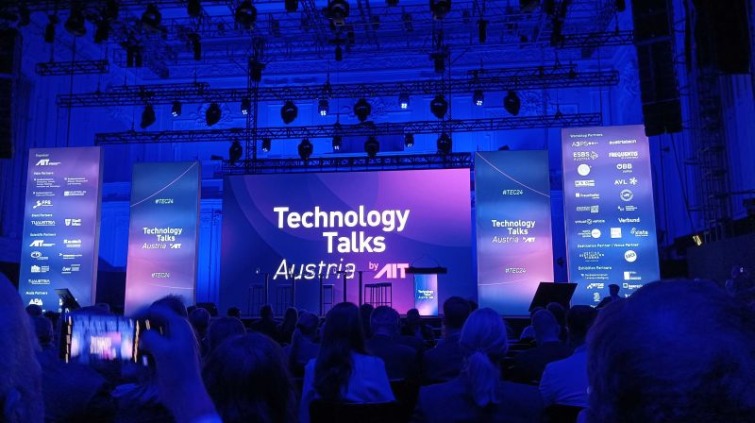
The Technology Talks Austria 2025 will focus on the competitiveness of Austria and Europe, and FORWIT is set to make a significant contribution. In a high-profile workshop on the findings of the FORWIT “Science2Business” study, barriers to the commercialisation and scaling of research results will be identified and best practices presented.

Furthermore, Sylvia Schwaag Serger, Thomas Henzinger and Georg Kopetz will be speaking in panel discussions on European and national RTI policy and the necessary framework for strong competitiveness.

The event kicks off on 11 September at the Vienna Museumsquartier – we look forward to seeing you there!


WORKSHOP – FORWIT

Science2Business
Improving the translation of research results into innovative products

Thursday, 11 September | 15:00 | MQ Ovalhalle

Although Austria invests heavily in research and development, its performance reveals a significant divergence between input and output: the resources deployed do not deliver the expected return. Yet the ability to commercialise and scale innovations is crucial for robust, global competitiveness.

This workshop will explore the key question of how we can effectively translate research and development results into economic success and ensure that long-term value creation is secured domestically.

To this end, we will present the findings of the FORWIT “Science2Business” exploratory study, which identifies barriers to the commercialisation and scaling of research results. Together with experts from innovative companies, we will examine aspects such as product-market fit, speed to product, the role of societal risk appetite, how to secure technology within the country for the long term, and strategies to successfully overcome the various obstacles in the transfer process.

Experts

Brigitte Ecker
WPZ Research

Oliver Holle
Speedinvest

Maria Kollmann
AVL List

Georg Kopetz
FORWIT/TTTech

Wolfgang Platz
Katharo Ventures

Sok-Kheng Taing
Dynatrace

Alexandra Mazak-Huemer
FORWIT

PANEL 4

Framework Conditions for Competitiveness

Friday, 12 September | 10:00 | MQ Stage

Together with Federal Minister Eva-Maria Holzleitner (BMFWF), Florian Süssenguth (Future Council, DE), Guy Lalanne (OECD) and Margot Weijnen (Research Council, NL), Georg Kopetz (FORWIT, TTTech) will explore the question of what framework conditions are necessary for RTI ecosystems and start-ups to foster a “new competitiveness” based on innovation, adaptability, talent management and sustainability.


PANEL 5

European RTI Policy

Friday, 12 September | 11:45 | MQ Stage

Sylvia Schwaag Serger (FORWIT), Sabine Herlitschka (Infineon), Maria Cristina Russo (European Commission, DG-RTD) and François Jacq (CNES) will focus on current and future developments and strategies in European RTI policy.


PANEL 6

National RTI Policy

Friday, 12 September | 12:45 | MQ Stage

Following a keynote speech by Thomas Henzinger (FORWIT), he will be joined by Ulrike Diebold (ÖAW), Henrietta Egerth (FFG), Iris Filzwieser (ACR), Georg Knill (IV) and Peter Moser (MUL) to discuss the findings and impetus from the Technology Talks 2025 for the future of Austrian RTI policy.

Innovation Act and 28th Regime: Impetus for a competitive startup ecosystem

A fundamental improvement in the situation of new enterprises is among the declared priorities of the European Commission (EC) to restore the competitiveness of the European Union to a global level. Over the summer, two legislative initiatives were launched to this end: the European Innovation Act and the 28th Regime.1 Both are intended to enhance the framework conditions, including better access to finance, a Union-wide legal form, and other regulatory measures.

The issue has been a long-standing concern and gained new urgency with the so-called Draghi Report published a year ago, which is also reflected in the Competitiveness Compass. As a significant intermediate step, the EC published a Startup and Scaleup Strategy at the end of May 2025, which aims to define the conditions to enable European startups to rise to globally competitive players. Given its central importance, it is worthwhile to briefly analyse this strategy.

The strategy encompasses five key action areas, each containing central policy recommendations: (i) Smarter, Founder-Friendly Regulation, (ii) Better Access to Finance, (iii) Market Access and Public Procurement, (iv) Talent and Skills, and (v) Infrastructure and Support Ecosystem. Fundamentally, the strategy addresses those challenges that have been identified as central in Europe over the past ten years, such as late-stage financing, regulatory barriers, and talent shortages.

A strength of the strategy lies in its goal to harmonise key framework conditions within the EU more effectively, for example in the area of company formation. Such harmonisation could be crucial in facilitating cross-border scaling of startups. This is particularly important because Europe has so far lagged significantly behind leading innovation countries such as the USA and China, especially during the growth phase (scaleup phase).

Nevertheless, the strategy also entails certain risks—such as implementation uncertainty, since many of the proposed measures require cooperation among all Member States. A lack of cooperation could therefore hamper the implementation of key reform projects.

Challenges: IPO markets, capital market, and tax policy

The exit market in Europe continues to face major challenges. FORWIT council member Georg Kopetz notes: “IPO markets are less liquid and significantly smaller than, for example, NASDAQ. Moreover, compared to the USA and China, there are considerably fewer large European tech corporations that could act as potential buyers. Risk aversion is also significantly higher in Europe than in the USA, China, or India.”

Added to this is the fragmented capital market. According to Invest Europe and OECD, venture capital investment per capita in the EU is significantly below that of the USA and the UK. Europe has more seed financing but fewer Series B+ or growth capital rounds. Unicorns (valued over €1 billion) thus occur less frequently, partly because startups sell earlier or relocate—and this is reflected, among other things, in lower productivity compared to the USA.

Beyond these structural market conditions, tax policy design plays a crucial role in the competitiveness of European growth companies: the IMF concludes, regarding Europe’s productivity gap with the USA, that the current tax structure in Europe is not optimal for promoting fast-growing firms. 2 More efficient support for corporate growth requires avoiding size-dependent fiscal and regulatory incentives for companies or aligning incentives more closely with corporate R&D investments. 3 This could include measures such as accelerated depreciation and tax credits for R&D investments rather than broad cuts in corporate tax or indirect support for businesses. Tax incentives for research and development can be designed to support young, innovative enterprises. 4

Proper ambition must be coupled with proper implementation

With the Startup and Scaleup Strategy, the EU aims to further develop Europe into an active platform for the creation and dissemination of innovation. It complements several other activities mentioned in the Competitiveness Compass, all of which fall under the theme of competitiveness. These implementation steps at the European level will reveal how effectively the fundamentally correct ambitions are realised. Even though the strategy promises simplified regulations and innovation-friendly framework conditions, there is a risk of increased regulation—for example, due to rising bureaucratic burdens in implementing and applying the support measures foreseen in the strategy.

Fundamentally, care should be taken not to spread resources too thinly across numerous small-scale initiatives but rather to focus on a few, internationally competitive scaleups. FORWIT will intensify its investigation of the ecosystem for startups and scaleups within its STI competitiveness workstream, not least in light of the legislative initiatives mentioned above.

  1. At present, both initiatives are open to public consultation, allowing submissions to the European Commission. For the 28th Regime here (deadline: 30 September) and for the European Innovation Act here (deadline: 3 October 2025).↩
  2. See International Monetary Fund (2024), Regional Economic Outlook: Europe’s Declining Productivity Growth: Diagnoses and Remedies, Note 1, November 2024.↩
  3. See Benedek, D/Pragyan D/Garcia B/Saksonovs, S/Shabunina A/Budina N (2017), “The Right Kind of Help? Tax Incentives for Staying Small”, IMF Working Paper 17/139.↩
  4. See Mitchell, J/Testa G/Sanchez Martinez, M/Cunningham, P/Szkuta.K (2020), “Tax incentives for R&D: supporting innovative scale-ups?”, Research Evaluation 29(2), pp. 121–134.↩

FZO 2025: Strategic course-setting for AI, top-level research and international talent

With an application volume of nearly €280 million, demand for funding in 2025 significantly exceeded the available budget. The Future Austria Fund (Fonds Zukunft Österreich, FZO) can therefore only support a portion of the submitted projects – overall, FORWIT recommends funding 11 initiatives with a volume of around €140 million. Focus areas include the new AI Factory ‘AI:AT’, programmes for attracting international top talent, and strengthening excellently rated but previously unfunded research projects. At the same time, the Council emphasises the necessity of long-term security for the FZO with the €200 million per year also planned by the federal government and suggests examining alternative funding sources.

Recommendation for Fund Allocation 2025: AI Factory, International Talent and Excellence

In total, eligible funding organisations submitted 19 applications with a volume of €279.5 million – representing an increase of around 40% compared to the previous year. Following a thorough evaluation of the applications, the Council recommends funding four projects under the priority area “Competitiveness and Key Technologies” with €72 million, four under the priority area “Collaborations and European Participations” with €38 million, and three under the priority area “Talents and Skilled Personnel” with €30 million.

€40 million – a considerable share of the funding – goes to the AI Factory ‘AI:AT’, affecting the entire distribution of FZO funds for 2025.
Thomas Henzinger

€40 million – a considerable share of the funding – goes to the AI Factory ‘AI:AT’, which was only approved by the European Commission in March, affecting the entire distribution of FZO funds for 2025, as Council chairman Thomas Henzinger notes. “However, we also consider it essential for Austrian competitiveness and innovation capacity to rapidly cover a wide range of much needed and time-critical services in the AI sector through the AI Factory and its planned services – such as expanding AI infrastructure, community support and training.”

Two projects from FWF and ÖAW are intended to contribute to attracting international researchers and talent. The aim is to target not only researchers working in the USA, but particularly those who had considered the USA as their career destination but are now seeking alternatives due to developments there.

FORWIT considers the FFG’s ‘Seal of Excellence’ programme an efficient and effective contribution to promoting Austrian top-level research. This enables research projects to be carried out that were assessed as excellent by the ERC or EIC Accelerator but were not funded due to lack of resources. The effort for screening, assessment and selection is largely eliminated and outstanding projects can thus start more quickly. However, in order for the programme to be carried out in compliance with the law, the necessary amendments to the FFG funding guidelines must be implemented in good time.

Examining Alternative Options for Long-term Financing of FZO

In its recommendation, FORWIT emphasises that all proposed initiatives possess the potential to make an important contribution to strengthening Austria’s research and innovation system. However, due to the fixed funding budget of €140 million, strategic prioritisation of the initiatives was unavoidable.

“The quality and scope of applications show that there are far more projects worthy of funding than can currently be financed.”
Sonja Sheikh

“The quality and scope of applications show that there are far more projects worthy of funding than can currently be financed. In the interest of the future viability of the Austrian STI system, it is therefore all the more important to secure the FZO long-term with appropriate funds – as set out by the federal government in its programme,” confirms Sonja Sheikh, Council member and chairwoman of the FZO working group in FORWIT. That only €50 million is budgeted for 2026 due to the extremely challenging budget situation is fiscally understandable, but has implications for the programme portfolios of the funding agencies and thus also for research and researchers in Austria.

“The goal must be to distribute €200 million annually through the FZO from 2026 onwards.”
Thomas Henzinger

From the Council’s perspective, alternative financing options should therefore be examined. FORWIT suggests, for example, dedicating funds from dividend distributions of the Austrian Holding Company (ÖBAG) to the Future Austria Fund in future and making donations to the National Foundation, which administers the FZO, tax-deductible. “The goal must be to distribute €200 million annually through the FZO from 2026 onwards as an essential instrument of Austrian STI policy for promoting Austria’s future competitiveness,” Thomas Henzinger confirms.

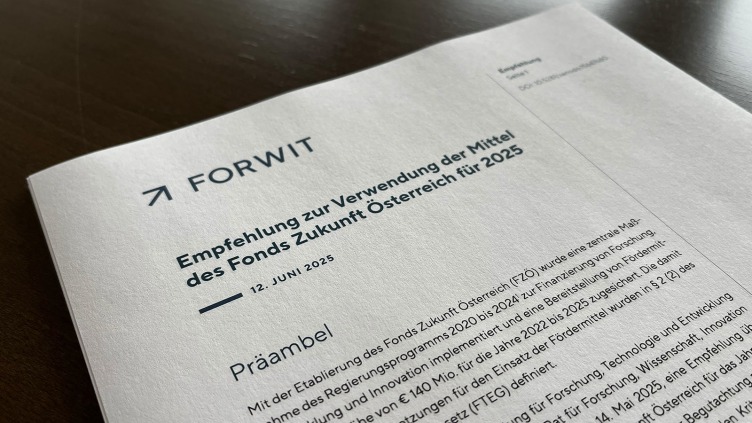
The complete details and justifications for the recommended fund allocation can be found in FORWIT’s recommendation published today.

On the efficiency of research, technology and innovation in Austria

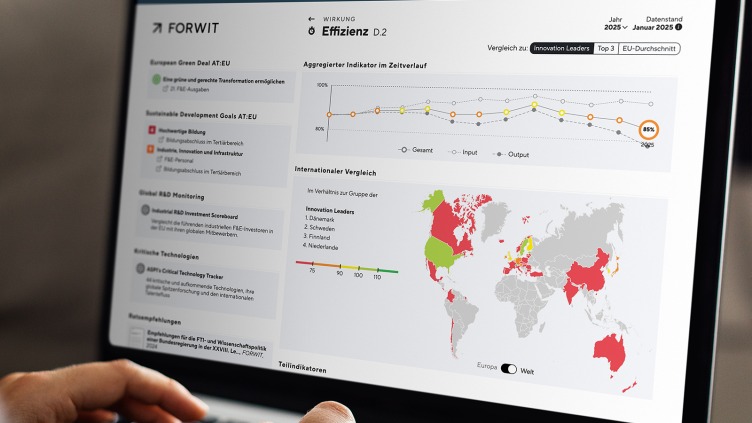
At the end of May, FORWIT presented its annual analysis of the Austrian STI system in Parliament. The STI Monitor provides an international comparison of the performance of the Austrian STI system based on more than 280 indicators. This analysis is freely accessible and intuitively designed, allowing different perspectives on the STI system, from the framework conditions, through the core system and cross-cutting themes, to its impact. The following summary represents only a small excerpt from the extensive analysis by FORWIT. Based on the presentation on 26 May 2025, it focuses on the innovation processes in the STI core system by comparing policy indicators for performance support (input indicators) and performance indicators (output indicators).

Methodologically, the efficiency measurement follows Data Envelopment Analysis, a multifactor productivity analysis model for estimating relative efficiency. The presentation begins with a critical assessment of the efficiency of the science system (including higher education and non-university research and their funding) and then analyses the entrepreneurial STI performance in Austria. Special attention is given to the competitiveness in STI measured by key technologies, which has been included as a new category in the analysis. Finally, the use of the transformative key technology Artificial Intelligence (AI) in Austrian companies is examined in more detail.

I. Efficiency and the Dimension of Science

Scientific Sector

The composite indicator “Science” in area D.2 Efficiency, which represents an average of all related indicators, shows a relatively constant development for Austria below the level of the comparison groups. An interesting comparison point is Iceland, which has been among the top three countries since 2024. Despite its small size, Iceland has achieved a leading position worldwide through early and consistent focus on niches such as genomics and the central use of health data. This underscores that even smaller economies can achieve international visibility and leadership roles through clear research policy focus and strategic specialisation. In contrast, Austria pursues a more diversified approach aimed at the breadth of the innovation system.

Higher Education and Non-University Research

R&D Expenditure: Measured as a share of GDP, Austria ranks second (behind Denmark, ahead of South Korea) among the top nations. This indicates a high political prioritisation of R&D. In terms of actual expenditure per capita (measured in US dollars at purchasing power parity), Austria is above the average of the Innovation Leaders, with Switzerland leading.

Number of Researchers: Austria has a value of 2.35 (in full-time equivalents). Greece is notable in the top three, which is due to a strong concentration of R&D activities in the public sector. In contrast, the industrial R&D base is weak compared to Austria.

Funding

Private Funding Share: In Austria, around 66.9% of gross domestic expenditure on R&D (GERD) is financed by the business sector. Although this is two-thirds of all expenditure, it is slightly below the EU average. A high private share is positive as it indicates a strong link between R&D and value creation, and thus a market-oriented innovation dynamic. Ireland is a top country here due to the presence of global tech and pharma companies, favoured by low taxes.

Public Funding (Higher Education Sector): Austria invests around 0.6% of GDP in R&D in the higher education sector, making it one of the top three countries. The country traditionally has a strong public FTI sector with universities, non-university institutions, and universities of applied sciences. This supports the many small and medium-sized enterprises (SME) that often conduct R&D in cooperation with these institutions.


Indirect Funding: The Austrian research premium of 14% is a strong location policy instrument but is not statistically attributed to the private funding share. This potentially leads to an underestimation of the private contribution. Internationally, Austria has slightly fallen behind in this form of funding and ranks ninth.

Project-Funded Basic Research: In project-related funding for basic research, Austria’s per capita funding is comparatively low, indicating a below-average level compared to the nine countries considered.

Scientific Output: Publications

Number of Publications: Per 1,000 inhabitants, Austria is above the EU average. Switzerland, which has a particularly high publication density, Denmark, and Norway lead here.

Quality of Publications: Measured by the share of publications that belong to the top 10% most cited worldwide, Austria shows high scientific relevance. Austria achieves above-average results in relation to the input in the fields of medicine, physics, materials science, and computer science.

II. The Dimension of Technology: Corporate RTI

R&D Expenditure of Companies: As a share of GDP, Austria is well above the EU average and the benchmark of the Innovation Leaders. Leading nations such as Israel, South Korea, and the USA are driven by billion-dollar corporations in sectors such as defence, biotech, and IT, while Austria’s sector is heavily SME-oriented and, like Germany and Sweden, has a broad product portfolio.

Innovative Companies: The number of innovative companies is slightly declining. This is due to methodological reasons (a stricter definition of innovation in the survey), economic reasons (uncertainty due to the pandemic, inflation), and structural reasons (declining innovation activities in traditional industries).
Cooperation with Universities: Cooperation is also declining, which is also due to a changed survey methodology. Only clearly defined projects are counted, not pure networking meetings or events as in the past.

Export Quality: Measured by price as a proxy for technology content, Austria shows a significant increase. This is due to industry-specific specialisation and the development towards technology-intensive components, but is also influenced by inflation.


Knowledge Intensity of Exports: The share of products with medium to high technology intensity is relatively stable in Austria, indicating a broad and diversified export structure. In contrast, Hungary has a narrower export focus (e.g., automotive), where knowledge intensity often arises from production for foreign companies, while R&D takes place elsewhere.

Innovation Revenue of SME: Here, there is a marked decline, mainly due to economic uncertainties and a redistribution of investments away from marketable product innovations towards internal optimisation measures, particularly in the areas of digitalisation and automation. As a result, fewer innovations with scaling potential are currently reaching the market. In addition, technological innovations typically require longer development and lead times before they become economically effective.

III. Competitiveness and Key Technologies

Innovation is a central lever for competitiveness. The STI Monitor has therefore been expanded to include the area D.3 “Competitiveness in STI”, which is analysed based on key technologies. Patent data, considered a robust indicator, serves as the basis. The analysis is based on five metrics: (i) number of patents at the European Patent Office (EPO), (ii) patents per capita for international comparability, (iii) Revealed Technological Advantage (RTA) as a measure of technological specialisation, (iv) triadic patents (applications in the EU, USA, Japan) as an indication of commercial significance, (v) citation weighting as an indication of quality. Austria files most patents in the areas of production technologies, digital technologies (especially micro/nano-electronics), and material technologies.

An example shows that high national specialisation (high RTA) does not automatically lead to an international top position: In the area of the Internet of Things (IoT), Austria has an above-average specialisation but ranks only 19th internationally. Comparing 2015-2019 to 2020-2022, there is a decline in robotics (both in patent applications and specialisation), while Austria has improved in photonics and advanced materials. The qualitative significance of patents, measured by citations, was lower in almost all technology areas in 2020-2022 than in the previous period.

Focus: Artificial Intelligence (AI)

In the area of Artificial Intelligence, Austria performs below average in all indicators. Advanced AI methods such as machine learning are rarely used; instead, text analysis and chatbots are primarily utilised. The use is mostly isolated in individual departments, lacking a structured approach in implementation and strategic, company-wide integration. Barriers include lack of competence, high costs, and data protection concerns. Notably, most surveyed companies indicate that they currently see no benefit in using AI.

IV. Conclusion

Austria’s STI system presents itself as a complex structure with clearly recognisable strengths and existing challenges. The analysis shows that the country has remarkably high scientific quality and productivity, reflected in the international recognition of Austrian research achievements. Particularly noteworthy is the traditionally strong research cooperation between science and industry, which forms an important bridge between theoretical knowledge and practical application. This close interconnection is also reflected in the technology-intensive product exports, which underline Austria’s position as an innovative business location.

Despite positive aspects, the analysis also highlights structural weaknesses that could jeopardise Austria’s future competitiveness. Significant deficits are particularly evident in the introduction and strategic use of Artificial Intelligence and the comprehensive digitalisation of the economy. These fields are increasingly becoming central drivers of international location attractiveness – making the existing deficits all the more concerning. Additionally, there is a significant lack of private risk capital, which hampers the development of start-ups and spin-offs, thus limiting the dynamics of the innovation ecosystem. Furthermore, the potential for the economic exploitation of scientific findings remains insufficiently tapped – an indication that the transformation of research results into marketable innovations is not yet consistently successful.

The overall view makes it clear that research, technology, and innovation remain central pillars of Austrian economic and location policy. To avoid falling behind in the intensified international competition, continuous and strategically oriented investments are essential. It is crucial to preserve the existing strengths while simultaneously addressing the identified weaknesses to secure Austria’s position as an innovative location in the long term.
STI Monitor 2025: Austria’s competitiveness in STI

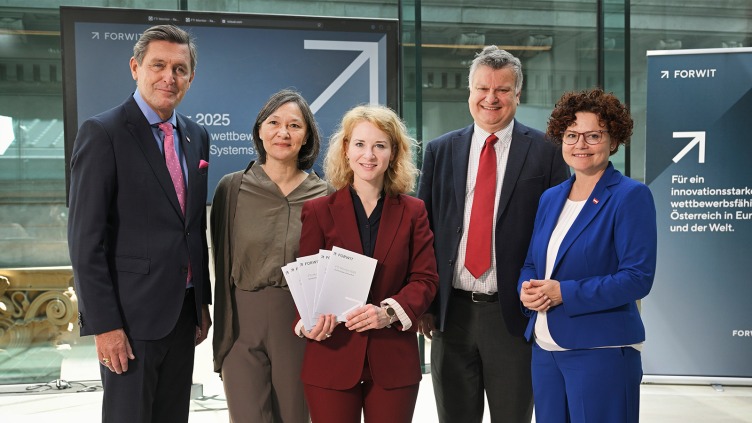
On Monday, the Austrian Council for Research, Science, Innovation and Technology Development (FORWIT) presented the STI Monitor 2025, which provides information on the current performance of the Austrian STI system. In addition to the latest findings on national innovation processes, the presentation focussed in particular on the two new areas added this year: Competitiveness in STI and Artificial Intelligence.

Austria’s national strengths do not automatically lead to top international positions

An analysis carried out by WIFO on behalf of FORWIT sheds light on how many patents are registered in Austria in various key technologies and how strongly the country has specialised in them.

This shows that Austria’s performance has improved significantly in recent years, particularly in the key technologies of photonics, advanced materials and quantum technology – both in terms of the number of patents and the degree of specialisation. In photonics, for example, the country ranks among the top 5 internationally in both aspects, and there has also been progress in specialisation in the areas of IT for mobility and the Internet of Things. However, the country often falls behind in terms of the international significance and citation frequency of its patents – an indication of its lower economic and technological importance. Countries with a significantly higher number of large technology-intensive companies, such as Switzerland, the USA or Japan, are usually better positioned here, develop faster in some cases and specialise more strongly, meaning that Austria’s domestic strengths do not automatically lead to top global positions.

Those who can keep up in the technology race can keep up everywhere.
Sylvia Schwaag Serger

“For Austria – but also for Europe – the goal must be to become internationally competitive in key technologies. Those who can keep up in the technology race can keep up everywhere. This is because such technologies are geo-economically and economically important cross-cutting issues that require and affect all areas of society – from education and social affairs to science, business, politics, security and defence – in equal measure. Strength in key technologies can therefore also be seen as a product of the strength of an entire society,” says Sylvia Schwaag Serger, Deputy Chairwoman of FORWIT.

Companies are increasingly seeing barriers to the use of AI

As such a broad cross-sectional technology, companies must therefore also be able to use artificial intelligence sensibly and effectively in order to keep up internationally. Although Austrian companies are catching up in the entrepreneurial use of artificial intelligence (AI), they only reach 73% of the performance level of the Innovation Leaders.

In 2024, just under 20% – around twice as many as in 2023 – of Austrian companies with ten or more employees used at least one AI technology. Although this is above the EU average, it is below the level of the European Innovation Leaders Denmark, Sweden, Finland and the Netherlands, where around a quarter of companies use AI. Austria also lags behind leading countries such as Finland and the Netherlands (> 6%) in the highly relevant use of AI in research and development with only 3.8% of companies. In addition, the number of companies that see no benefit in the use of AI is increasing, in contrast to the Innovation Leaders and the EU27.

Smaller companies in particular find it difficult to strategically integrate AI into their processes. Legal uncertainties and a lack of expertise, but also insufficient data quality and technical incompatibility are perceived as important reasons for this. It is not the technology itself that is lacking, but rather the structures, expertise and clear framework conditions. Austria should offer targeted support in the area of the key technology of artificial intelligence so that companies – especially the many small and medium-sized enterprises – can utilise it better to their advantage. This includes assistance with knowledge transfer to encourage innovation.

Competitiveness in research, technology and innovation is the foundation for growth, security and future viability.
Thomas Henzinger

“Competitiveness in research, technology and innovation – especially in transformative technologies such as artificial intelligence – is the foundation for growth, security and future viability. We can only secure prosperity, respond agilely to global challenges and promote European independence in the high-tech sector if we play a leading role internationally and utilise these technologies correctly. Science and innovation guarantee that Austria remains resilient, creates new jobs and is recognised as an attractive location for talent and companies,” says Thomas Henzinger, Chairman of FORWIT, emphasising the importance of research, technology and innovation.

The complete analyses and results of all 18 areas of the STI system are now available in the STI Monitor 2025.

About the STI Monitor

With the STI Monitor, FORWIT makes a significant contribution to evidence-based policymaking in Austria and provides an international comparison of the performance and competitiveness of the Austrian research, technology and innovation system. Visualisations of the development over time and long-term changes as well as trends, input/output performance and the degree to which the goals of the STI Strategy 2030 have been achieved provide stakeholders and political decision-makers with a basis for strategically and systemically effective decisions and actions. As the federal government set itself the goal of making Austria an innovation leader by 2030 in its STI Strategy 2030, the average of the current innovation leaders in the European Innovation Scoreboard (EIS) serves as a benchmark. Austria can also be compared with the EU27 and the global top 3 in the respective field.

6th session and retreat of the Council

The 6th meeting of the FORWIT Council began on Monday 26 May 2025 with a working breakfast, which was also attended by three representatives of the federal government. Federal Minister Eva-Maria Holzleitner, Federal Minister Peter Hanke and State Secretary Elisabeth Zehetner got to know the FORWIT Council members and took the opportunity to discuss the ambitious research and innovation policy goals in the government programme. This was followed by the presentation of the STI Monitor 2025 on the premises of the parliament, where almost 100 people from all parts of the STI system listened to FORWIT’s analysis.

Two-day retreat in Baden

The Council meeting then retired to a seminar hotel in Baden for a two-day retreat together with the office staff. In addition to reports on the status of the two main topics – Studying in Austria (Head: Tom Henzinger) and Competitiveness in STI (Head: Georg Kopetz) – the meeting also discussed how FORWIT can play an active role in the coming weeks given the numerous mentions of various projects in the government programme that fall under the area of science, research and innovation. The main focus will be on analysing the higher education system in preparation for a higher education strategy 2040. However, the rapid development of recommendations for the next RTI pact, which is to be adopted by the federal government by the end of the year, is also a high priority.

Impetus for research, innovation and European networking

Intensive work was also carried out on the topics of artificial intelligence, key technologies, research security and scientific freedom. The Council also discussed the latest developments in the area of European research policy, based on the Federal Government’s reflection paper on the next research framework programme. Further networking with other council formations and advisory bodies – both internationally and in Austria – will continue to be promoted; and FORWIT will continue to advocate a proactive, European perspective on STI policy in Austria.

Speech by the Chairman on the occasion of the presentation of the STI Monitor 2025

Dear Federal Ministers, dear State Secretary,
dear representatives of the Austrian STI system!

I would like to talk briefly about the STI Monitor that has just been presented. Many in Europe envy us this instrument. Alexandra Mazak-Huemer regularly receives enquiries from various countries and administrations who want to build a similar instrument. One of the advantages of the STI Monitor is that it has already been online for four years and is intuitive to use. This means that each and every one of you can familiarise yourself with the results. Another advantage is that the STI Monitor operates on a comparative basis, even beyond Europe. This allows us to always view performance in relation to other countries and their STI systems.

Last but not least, the STI Monitor contains historical time series and thus becomes more valuable from year to year – it enables us to track developments. For us at FORWIT, the STI Monitor is also the regular starting point for our analyses, recommendations and statements. For more than 15 years, the Council office has been working on the evaluation and assessment of the now more than 260 indicators. This is an enormous wealth of knowledge that has been built up.

Science policy and research policy are sometimes the opposite of rational and reasonable.
Thomas A. Henzinger

We generally associate science and research with rationality, reason and objectivity. Scientists go where the data, where the evidence leads them. If I have learnt anything as President of the Institute of Science and Technology Austria (ISTA) and now as Chairman of FORWIT, it is that science policy and research policy are sometimes the opposite of rational and reasonable. Like any policy, they are often reactive and impulsive, sometimes driven by vested interests – and yes, that too: emotional.

Evidence – especially when it comes to measuring impact – is not only very difficult to establish. Evidence is also not always the starting point for decisions to the extent that might be desired. Perhaps, as the scientist in me says, that’s okay. Politics needs to take other things into account than cold figures. Indicators alone are never sufficient to justify and implement political decisions. But they do represent something like orientation aids and can provide counter-examples to theories. Above all, they can help to objectify a debate and formulate common goals. This is the true value of the STI Monitor.

As FORWIT, it is our task to support the federal government. As an independent council, it is our role to make recommendations and possible courses of action based on the available evidence. In this round, I don’t think I need to convince anyone that science, research and innovation are central to the future prosperity and security of our country.

As soon as the 4% target is mentioned, many people start to extrapolate the millions to be derived from it for their organisation, their agency, their section. This calculation will not work out.
Thomas A. Henzinger

To put it bluntly, it is quite a relief for all of us in the Council that we now have a federal government that is largely of the same persuasion. But at the same time, it would also be presumptuous to claim that nothing can be questioned in the Austrian higher education and STI system. As soon as the target of a research quota of 4% is mentioned – which is rightly included in the government programme – many people start to extrapolate the millions to be derived from this for their institution, their agency, their section. This calculation will not work out.

Not only because the budget situation is indeed serious. Not only because a crisis should be used to increase efficiency and cancel projects that have become obsolete. Not only because the private sector – one of Austria’s proven weaknesses, as the STI Monitor shows – should also make an above-average contribution to achieving the 4% target. But above all because, even if every instrument and every detail of science and research policy were now optimised, this certainly cannot mean that everyone must continue to grow aliquot.

All systems need renewal – new ideas and new priorities – in order to remain competitive. No one around us is standing still. This applies even more to research and innovation than to anything else. The new government should therefore make decisions, even if they are not easy. To this end, I would like to appeal to all members of the Federal Government present and invite them to use us. In FORWIT you have an independent point of contact who will endeavour to have only one interest in mind: the future of the Republic. Even – and especially – when the resulting advice is not always convenient.

All systems need renewal – new ideas and new priorities – in order to remain competitive.
Thomas A. Henzinger

Finally, I would like to briefly mention three projects for which we are already in dialogue with the civil servants and have begun the conceptualisation process. The first is the STI Pact 2027-29, which was kept out of the 2025-26 double budget and still has to be negotiated and finalised this year. The difficult decisions have therefore been postponed until now. It is foreseeable that the growth of previous legislative periods cannot be achieved in times of budget consolidation. This means that the pact has a very special role to play this time: we need to set priorities and possibly even look at instruments that we have grown fond of in a new light.

In this context, I would also like to thank all those who have helped to ensure that the Future Fund Austria is not completely cancelled for next year. After all, this fund is precisely one of the instruments that make it possible to prioritise research policy.

Secondly, the federal government has set itself an ambitious higher education strategy for 2040. I personally think this is very right and important. After all, universities are central when it comes to the production, communication, diffusion and application of scientific knowledge. I believe that this requirement can be used to structure the higher education landscape in Austria more clearly and adapt it to the requirements of the modern labour market.

Above all, however, I believe it is essential for reasons of democratic policy that the number of university graduates – especially those from educationally disadvantaged backgrounds – increases. I have said it many times before, but I repeat myself at every opportunity: education is our most effective – and perhaps our only – measure against populism and extremism.

Nothing less than the continued existence of the European idea is at stake.
Thomas A. Henzinger

Thirdly, FORWIT is involved in the two of the biggest issues of our time – artificial intelligence and security, especially research security. However, this is neither the place nor the time to pontificate on these two topics.

Nevertheless, I would like to issue a reminder. Nothing less than the continued existence of the European idea is at stake – sustainable prosperity in freedom and the rule of law, as opposed to the law of the jungle. With these less than encouraging words, I would now like to encourage you to engage in a joint dialogue. Because that is certainly one of Austria’s strengths.

First working breakfast with members of the federal government

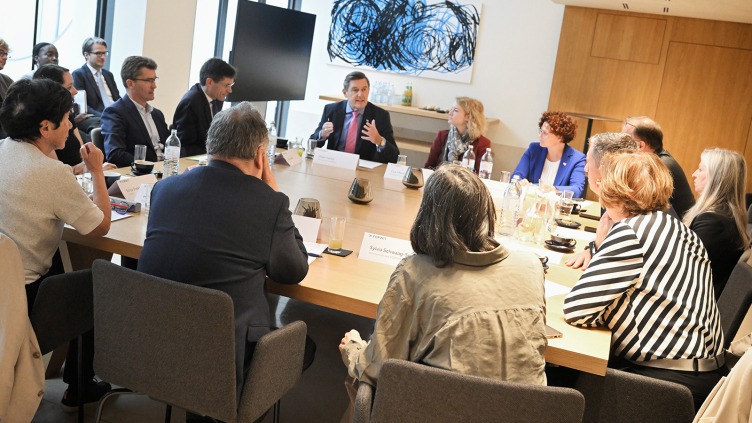
Every year, the presentation of the STI Monitor is also the occasion for a session and the annual FORWIT retreat. This year, the packed programme kicked off with the first joint working breakfast with Federal Minister for Women, Science and Research Eva-Maria Holzleitner, Federal Minister for Innovation, Mobility and Infrastructure Peter Hanke and State Secretary for Energy, Start-ups and Tourism Elisabeth Zehetner.

Higher education strategy 2040, RTI pact and long-term prospects

The main topics of the meeting were the federal government’s planned higher education strategy 2040 and the next STI pact. The discussion centred on the question of how FORWIT can effectively contribute its expertise to these projects. The participants agreed that in view of the current challenges – from the tight budgetary situation to the industrial crisis and declining productivity – a long-term, future-oriented STI policy is more important than ever.

The discussion emphasised the need to think beyond short-term goals and consider a time horizon of ten to fifteen years. This is the only way to ensure that Austria’s research, technology and innovation policy is sustainable in order to secure the country’s competitiveness and master social challenges.

FORWIT would like to thank all participants for the productive and motivated dialogue. The working breakfast showed how important open dialogue and cooperation are for the future of Austria.

Gallery

Sylvia Schwaag Serger, Thomas A. Henzinger und Helga Nowotny

Thomas A. Henzinger

Monika Ritsch-Marte

Sonja Sheikh, Johanna Pirker, Jörg Flecker und Georg Kopetz

Philipp von Lattorff und Monika Ritsch-Marte

Theresia Vogel

Elisabeth Zehetner

Peter Hanke, Eva-Maria Holzleitner und Elisabeth Zehetner

Budget: Despite Savings, a Promising Sign for Science and Innovation

FORWIT welcomes the commitment to research and innovation. The RTI Pact, higher education strategy, and international evaluation of the RTI system should now be addressed swiftly.

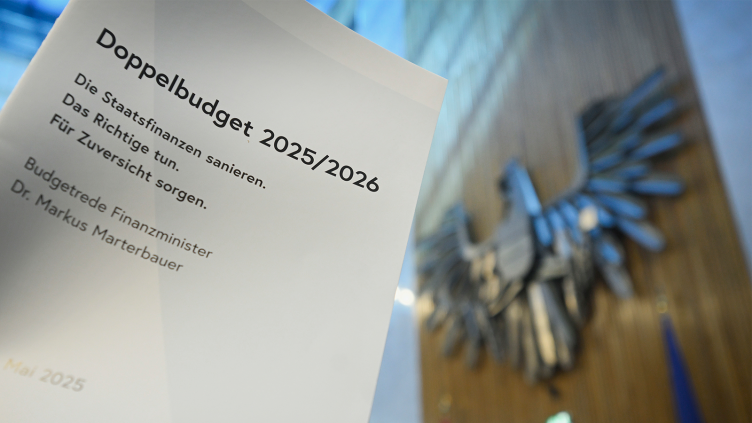
The federal government has presented a double budget with consolidation measures affecting all areas of society. However, the signals sent out in the budget speech also suggest that the federal government is aware of the central importance of research and innovation for Austria’s future. In his speech, the finance minister pointed out that research expenditure strengthens the country and contributes significantly to innovation and economic dynamism – and thus to urgently needed growth. “It is good that Federal Minister Marterbauer emphasises the need for investments in research and innovation for the country’s future. Now it is important that a corresponding RTI Pact for the three-year period 2027-29 follows quickly,” says Thomas Henzinger, Chairman of FORWIT.

The government has nevertheless avoided making disruptive cuts.
Thomas Henzinger

During the 2024 National Council elections and coalition negotiations, the Council regularly pointed out that expenditure on science and research represents an important investment in the future and creates the basis for Austria’s competitiveness and innovation capacity. From the Council’s point of view, the savings announced for 2025 and 2026 as a solidarity contribution are painful for Austria’s RTI sector. “In the context of the budgetary situation that will challenge us in the coming years, the federal government has nevertheless avoided making disruptive cuts,” says Henzinger. In his view, this applies not least to the Austrian Future Fund. He considers it a success that this small but significant financing instrument, due to its complementary effect, is not completely discontinued but will be maintained at a low level in 2026. For the following years, Henzinger expects the increase in the fund as planned in the government programme. This should also be used to focus the use of this fund in line with the next RTI Pact.

RTI Pact in the Context of Higher Education Strategy and Evaluation of the RTI System

The approach of recent weeks is also encouraging: in many individual discussions, ministers have exchanged views with research institutions and agencies on how the solidarity contribution required for budget consolidation should be structured. Furthermore, the federal government is adhering to the ambitious goal of a research quota of 4 per cent by 2030. However, this increases the challenge of successfully negotiating the next RTI Pact for 2027-29 by the end of this year. In addition to the multi-year financing lines, strategically relevant aspects should be specifically integrated.

The results of the interim evaluation of the RTI Strategy 2030 are expected to be available by mid-year, which should provide information on where there is a need for improvement in the RTI system and which opportunities can be used for its further development. Furthermore, the federal government intends to develop a higher education strategy for 2040 and to carry out an international evaluation of the RTI system. As an advisory board that is supposed to support the federal government in all matters relating to research, science and innovation policy, FORWIT sees itself as particularly obligated in these tasks, Henzinger affirms. “The discussion on how effective higher education and RTI systems can be achieved for a prosperous, resilient and sustainable Austria should begin now.”